
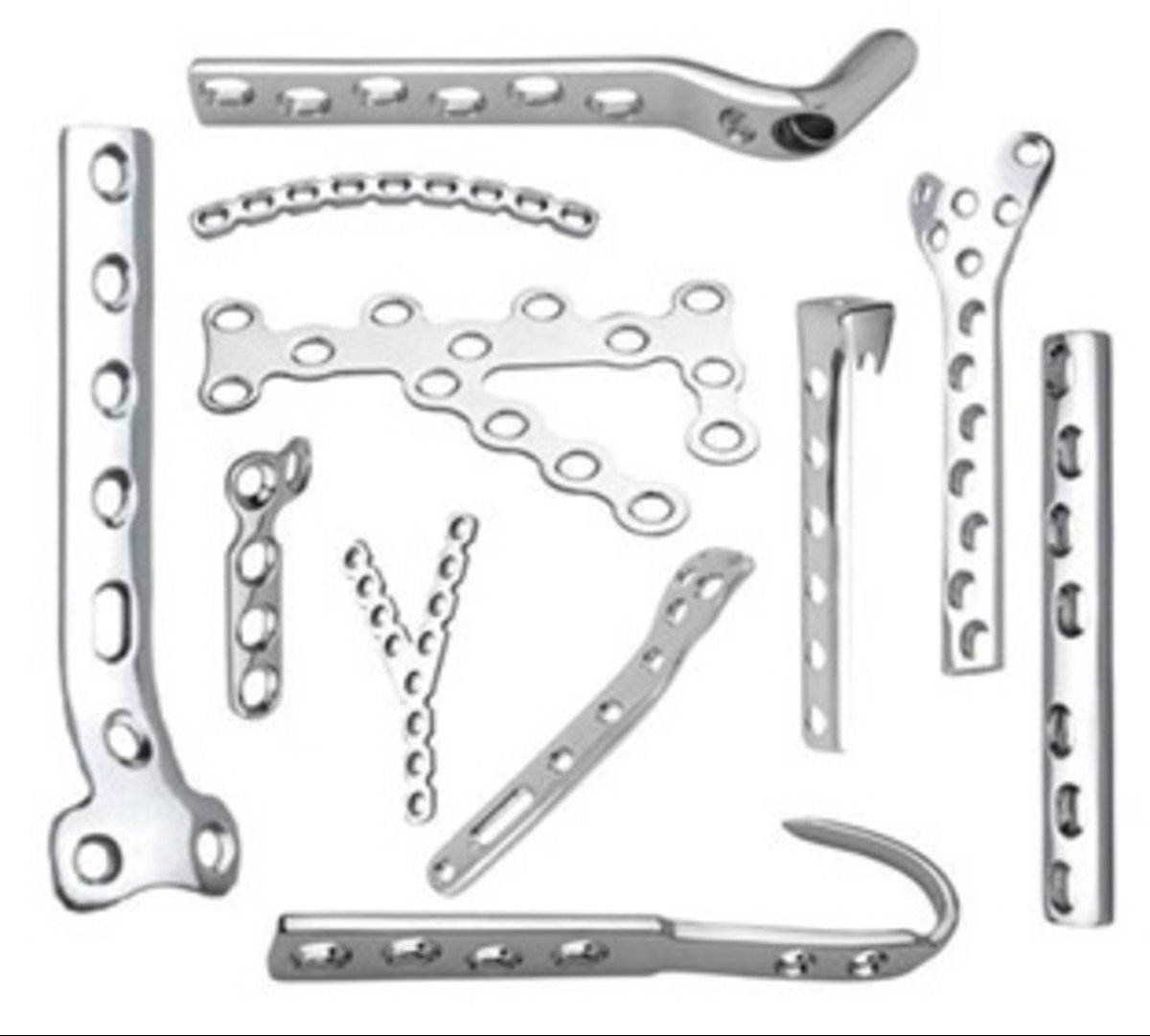
Stainless Steel
Stainless Steel is one of the most widely used and trusted materials in orthopedic surgery due to its excellent strength, biocompatibility, and resistance to corrosion. In orthopedic applications, Stainless Steel (usually medical-grade 316L or 316LVM) provides exceptional mechanical stability, making it suitable for implants and instruments that must withstand high loads, continuous movement, and long-term use inside the human body. Its smooth, corrosion-resistant surface prevents reactions with bodily fluids, supports tissue compatibility, and ensures long-term performance without degradation. Stainless Steel is commonly used in trauma implants such as bone plates, screws, intramedullary nails, external fixator systems, and various surgical instruments. Its durability, reliability, and cost-effectiveness make it a preferred choice in orthopedic treatments, especially in trauma and fracture management. With advanced manufacturing processes and improved alloy purity, stainless steel orthopedic implants continue to deliver safe, strong, and consistent results for patients worldwide.
In orthopedics, Stainless Steel is extensively used for manufacturing bone plates, cortical and cancellous screws, intramedullary nails, k-wires, external fixator components, and a wide range of surgical instruments. Its high tensile strength allows implants to handle repetitive stress and weight-bearing forces during patient movement and recovery.
Even in complex fracture cases, Stainless Steel implants provide strong fixation, rapid stabilization, and dependable mechanical support until natural bone healing occurs. For surgeons, the material’s versatility, predictable performance, and compatibility with standard orthopedic instruments make it one of the most trusted choices.